Posts

Showing posts with the label Christmas

Even in Difficult Times Santa Delivers

Image
As we explore the traditions and customs evident in the Christmas season an interesting question arises: how did Santa Claus carry on with the business of giving out toys during a crisis?  In the archives of the Sherburne History Center, we found evidence to suggest that although Santa Claus maintains a high level of diligence, his creativity and thoughtful nature allows him to achieve his tasks, still in one night!  A letter found in the archives of the Sherburne History Center further explains Santa’s workload.  Addressed to the Nelson sisters in Zimmerman, Minn, the letter, written during World War Two.  Although it is dated: “Not many days before Christmas.” With his busy schedule, Mrs. Santa Claus takes on the job of replying to Christmas letters.  “Santa works until nearly morning these nights and so he has me do all his writing for him,” she explained.  She went on to note that “he will have to use reindeers this year because of gas-rationing.”...

Holiday Feasts: Why Turkey?

Image
Thanksgiving marks the beginning of several celebratory feasts.   The turkey day, Christmas, and New Year’s Day call for some type of feast and celebration. With the end of the Thanksgiving feast, I paused to wonder about the food I had just devoured.   Specifically, why turkey?   After a brief search, I discovered a variety of meats served during the Thanksgiving and Christmas holidays.   Each of the centerpieces, whether they be turkey, goose, or pork; held a significant meaning to traditional diners.   In the United States most holiday revelers held Turkey as the primary dish of a festive meal.   Whether at Christmas or Thanksgiving, the bird of choice remained the gobbler.   The wild turkey must be hunted and killed.   And so, early feasts celebrated the holiday and the hunting skills of family members.   As you move into the twentieth century, turkeys became domestic farm animals and more easily attainable.   Goose and pork, on th...

Holidays and Their Food Traditions

Image
Beginning with Thanksgiving and continuing to Christmas and New Year’s Day celebrations, food remains a constant topic of discussion.   It seems appropriate, then, to explore food traditions during the holiday season.   Why do we serve turkey during the holidays?   In Minnesota, why is lutefisk a tradition in so many households?   Whatever happened to the traditional Christmas goose?     A quick search of the internet provides some leads to the important question of why these foods are served on the holidays. Lutefisk, white fish soaked in lye, is long a tradition of Norwegian foodways.   My favorite explanation of the importance of lutefisk suggests the fish reinforce the traditional image of the sturdy, strong Norwegian immigrants.   One story claims Irishmen in an effort to drive off invading Norsemen tried to poison a supply of dried white fish by pouring lye over a barrel of the fish.   By the time the poison was discovered, st...

Merry Christmas from the staff at SHC

Image
  As we celebrate Christmas 2017, we wanted to take a moment and share a small portion of the collection of Christmas cards from the Archives of the Sherburne History Center.   These all date from around 1910.   We hope you enjoy these and also have a safe and Merry Christmas.

Fruit Cakes Are Forever

Image
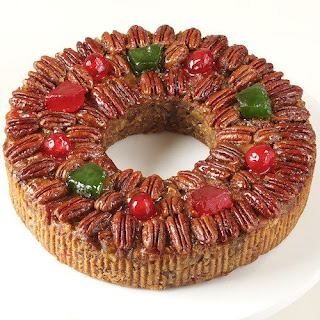
A brief report in the Sherburne County Star News illustrates the durability of fruit cake through the ages.  “Mrs. Elizabeth Dyson who died 17 years ago, for several years before her death suspended a fruit cake upon the Christmas tree for Rev. And Mrs. Shepardson, and though dead, the Christmas cake continues to appear annually.  Her works do follow her.”  And a MERRY CHRISTMAS TO ALL 

Electricity Comes To Elk River

Image
Exactly 100 years ago, electricity was a novelty in Elk River.  In the year 1916, a new company, Elk River Electric built a power plant and installed lighting throughout the village. Until the work of F. D. Waterman in 1915, the only buildings to have electricity were the Blanchett Hotel and the Opera House.  These were powered by gas fueled generators.  Elk River developed very quickly into “a most modern” community.  Beginning in 1912, Fred Waterman opened negotiations with the village to build a dam and power plant for the city.  The city itself agreed to maintain power lines and serve as the go between for customers and Waterman’s Elk River Electric Company.  After three years of struggle to find financial backing, the plant was built and power sent through the city in January of 1916.  Immediately, the streets of Elk River lit up.  The Sherburne County Star News explained, “for lighting the streets 40 sixty candle power and 10 one hundr...